
Stake Poker: Cash Tables, Tournaments and Card Games
Stake brings cash tables, tournaments and casino poker formats into its gaming categories. Choose a multiplayer table for hands against other players, or open a house-banked game such as Casino Hold’em with its own dealer rules. At cash tables, compare the stakes and seat availability; for a tournament, read the entry cost, starting stack, blind schedule and prize structure. Texas Hold’em and Omaha use different rules for building the final hand, so check the format before joining. Keep the table controls, action timer and account balance visible throughout the session.

Understanding the Stake Poker Lobby
A dealer-poker title pits your hand against the casino under a fixed payout schedule. A multiplayer poker table instead matches you against other players, with the operator generally collecting rake or an entry fee. These are different products even when both appear under “Poker”. A demo may be offered for some casino titles, whereas tournament registration follows the lobby’s own schedule. Compare the game format, entry cost and prize distribution before joining rather than choosing a table solely because of the headline prize.
Poker combines random card distribution with decisions about position, bet size and whether to continue a hand. Skill changes the quality of those decisions, but it does not make an individual result predictable. When comparing lobby entries, distinguish these common formats:
- Cash tables: chips represent money at the stated stakes. Check the minimum and maximum buy-in, blinds and rake; leaving a table is different from abandoning a tournament.
- Multi-table tournaments: a published buy-in admits you to a competition spread across tables. Blind levels increase, and the payout schedule determines which finishing positions receive prizes.
- Sit-and-go events: play normally begins after the required number of entrants registers. Check table size, speed and payout structure rather than assuming every SNG ends quickly.
- All-in or Fold: this restricted-action format simplifies each decision to committing your stack or folding. Its short decision tree does not remove variance or make jackpot outcomes likely.
Read the poker rules and account eligibility terms separately. A platform’s offshore licensing statement does not establish that real-money poker is available or permitted in your location. For game integrity, use the published information about card shuffling, collusion controls and dispute handling; do not infer those protections from a logo alone.

Getting Started at a Poker Table
Start with the account and poker-lobby requirements before moving money. Confirm that the selected format is available to your account, complete any requested verification and check whether the poker balance is separate from the casino wallet. Then use the following sequence:
Create account
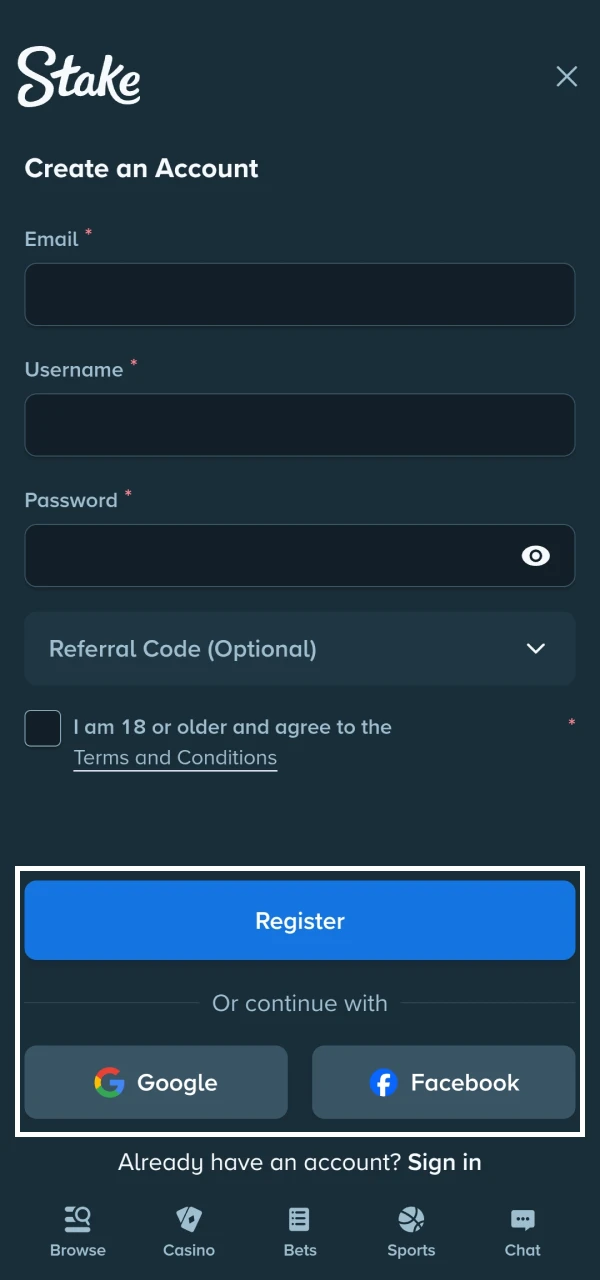
Open the account registration form and provide accurate details. Use a unique password and finish the age, identity or contact checks the account requires before taking a seat.
Fund your account
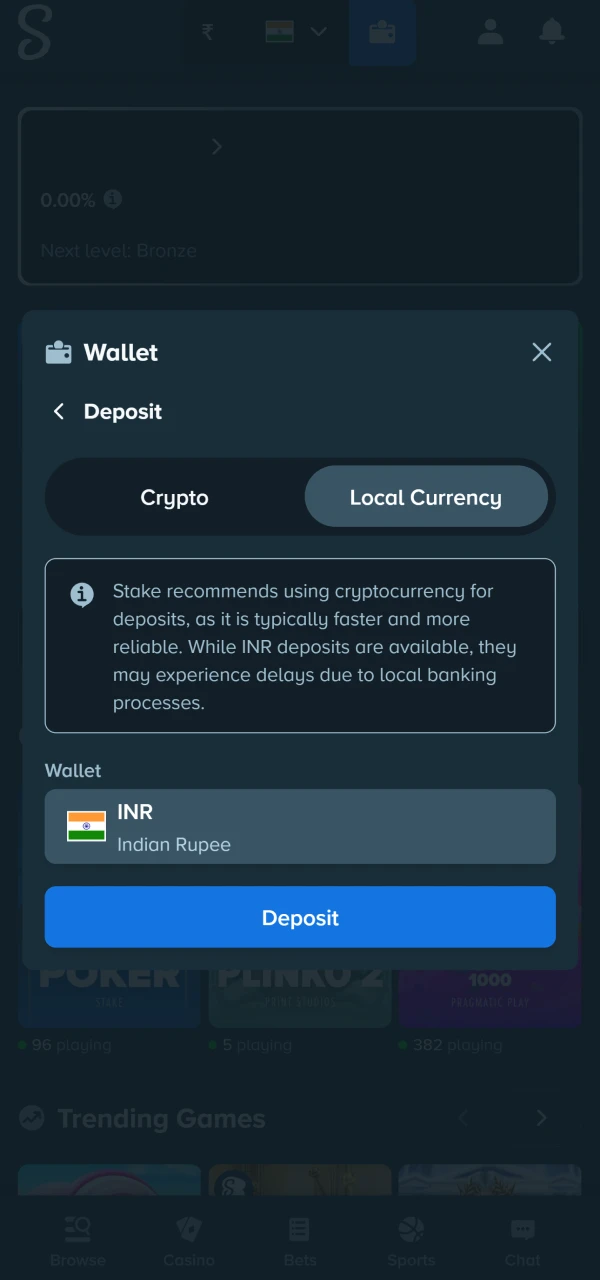
In your wallet, inspect the deposit options and choose a supported payment method. Confirm currency, fees and any transfer instructions before approving a payment; a listed method may have account-specific limits.
Find the Poker Lobby

Open the poker category and inspect the table list. Use the displayed game type, blind level and number of seated players to find a format you understand.
Check the buy-in before confirming a seat. For scheduled tournaments, also read the start time, late-registration window and re-entry rules. Registering early does not mean the tournament begins immediately.
Poker Rules and the Order of Winning Hands
Begin with hand rankings, then learn how betting rounds and legal card combinations work. In standard high-hand poker, a showdown compares the best permitted five-card hand. Before that point, a player may win when everyone else folds. Position, stack sizes and pot odds matter because a strong-looking starting hand is only one part of a decision.
A Practical Guide to Poker Hands
These standard high-hand rankings run from strongest to weakest. Equal categories are separated by card rank and, where relevant, kickers. Suits do not normally decide the winner; truly equal hands split the pot.
| Royal flush | Ace, king, queen, jack and ten of one suit: the highest possible straight flush in standard poker. |
| Straight flush | Five consecutive ranks in one suit. Compare the top card; an ace may be low in A–2–3–4–5. |
| Four of a kind | Four matching ranks plus a fifth card. Compare the four-card rank first and the kicker only if necessary. |
| Full house | Three cards of one rank with a pair of another. The three-card group takes priority when full houses are compared. |
| Flush | Five cards of one suit without consecutive ranks. Compare them from highest to lowest until a difference appears. |
| Straight | Five consecutive ranks, not all of one suit. The highest rank decides its strength; A–2–3–4–5 is the lowest straight. |
| Three of a kind | Three matching ranks and two other cards. Compare the triplet, then the remaining cards in order. |
| Two pair | Two separate pairs plus a kicker. Compare the higher pair, then the lower pair, then the fifth card. |
| One pair | Two matching ranks with three other cards. If the pair ties, compare those remaining cards from highest downward. |
| High card | No pair, straight or flush. Compare all five cards in descending rank; one high card alone may not resolve a tie. |
How Hold’em and Omaha Build a Hand
Both games commonly use community cards and the same high-hand ranking, but they allow different card selections. Learn this distinction before reading a board: a visible flush or straight does not automatically give every player that hand.
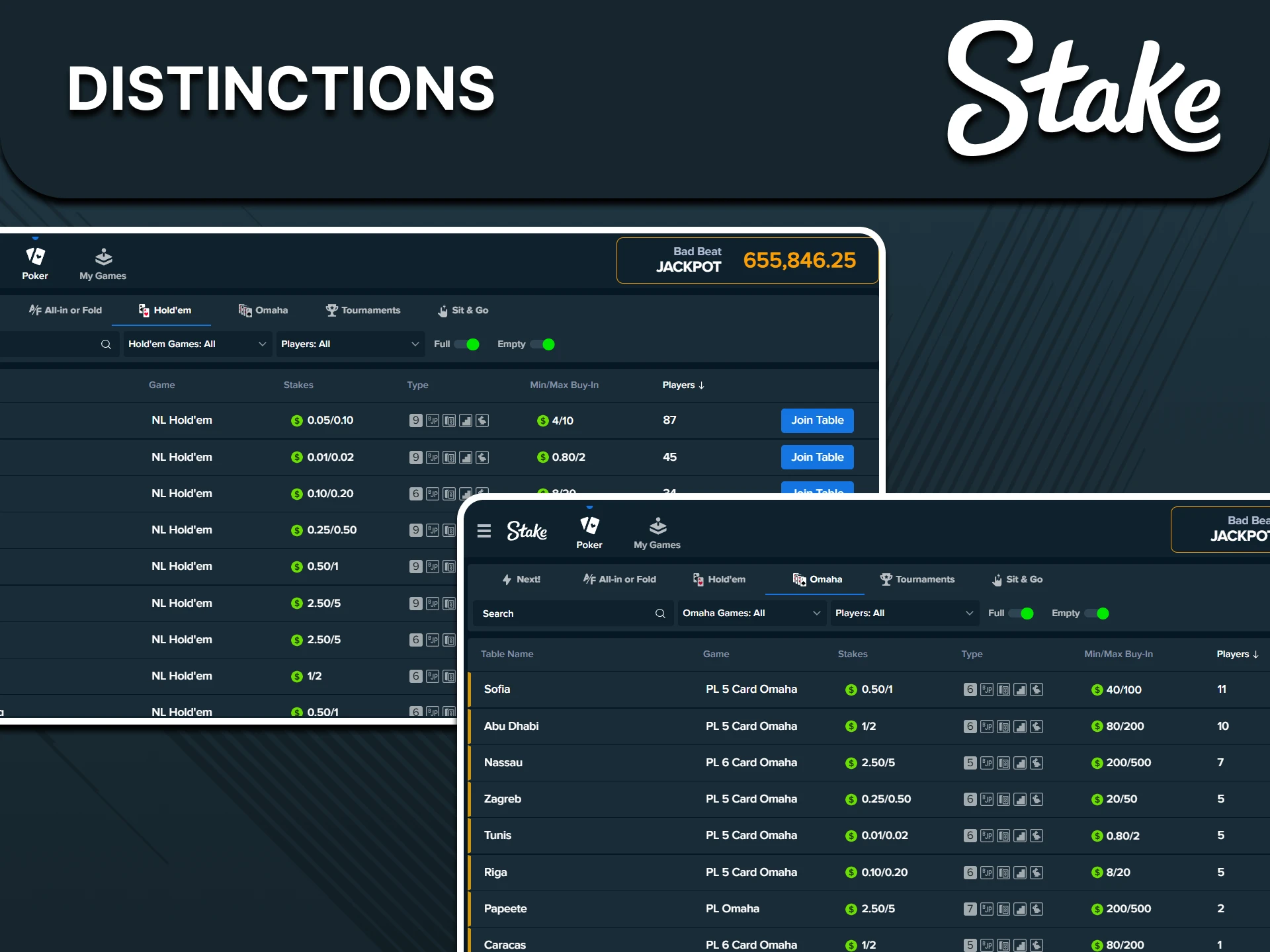
Texas Hold’em
Each player receives two private cards. Build the best five-card hand using both, one or neither of those cards alongside the community cards.
Omaha
In standard four-card Omaha, players receive four private cards. A valid five-card hand must use exactly two private cards and exactly three community cards, regardless of what the board appears to show.
Reading Poker Promotions and Jackpot Rules
Poker tables may advertise promotions with rules separate from casino offers. Check participating formats, qualifying hands, contributions and prize distribution before opting in. Two jackpot structures worth understanding are:
- Bad-beat jackpots: a losing hand must meet a defined strength threshold at an eligible table. Requirements can include using both private cards, a minimum player count and a qualifying pot. Read the current rules for the variant you actually play.
- All-in or Fold jackpots: only marked tables and qualifying card combinations may count. Blind levels, deductions and shared awards can affect the amount received; a displayed jackpot is not a fixed payment for every straight flush.
For any promotional code, verify its source, expiry and eligibility in your account. Do not assume a general casino reward applies to poker or deposit more simply to pursue a time-limited offer.

Questions answered
What is the highest standard poker hand?
A royal flush: ten, jack, queen, king and ace of the same suit. It is the highest straight flush; special poker variants can use different ranking systems.
Where can I check payment options for poker?
Look in the authenticated wallet for your account’s current methods, currencies and limits. Confirm whether moving funds into the poker lobby is required; a payment label in an article does not confirm availability.
What is the key card-selection difference in Omaha?
Omaha requires exactly two private cards and three community cards. Hold’em lets you use zero, one or two private cards. That distinction changes how you read draws and completed hands.
How can I control time and spending at poker tables?
Set a session budget and end time before taking a seat. Review the account’s available limit and exclusion tools; contact support if you need help applying a restriction.
Do poker hands always count toward loyalty rewards?
Not automatically. Check the current poker reward terms, eligible formats and calculation method. Poker rake and casino wagering can be treated differently within a loyalty programme.
Content snapshot:
Comments